
Oregon City · Local history
The Oregon City Municipal Elevator: A Short History
A 130-foot public elevator, free since 1915, that doubles as the only vertical street in North America.
Oregon City · Local history
A 130-foot public elevator, free since 1915, that doubles as the only vertical street in North America.
Published by Elevator Street, an independent web and growth studio in Oregon City, named after this landmark. We are not affiliated with the City of Oregon City.
The Oregon City Municipal Elevator is a 130-foot public elevator in Oregon City, Oregon, that carries people between the downtown riverfront and the neighborhood on the bluff above. It opened in 1915, was rebuilt in 1955, and has always been free to ride. The City of Oregon City calls the route Elevator Street and describes it as the only vertical street in North America.
A basalt cliff runs through the middle of this town, splitting it into two levels. Most cities in that position build a road. Oregon City built an elevator, made it free, and put it on the map as a street.
Oregon City is built on two levels. The business district and the mills sat on the riverfront; much of the housing sat on the bluff above, separated by a basalt cliff. Getting home from a shift at the mill meant a long climb up a public stairway.
The idea of a municipal elevator went to the ballot on July 8, 1912 and lost. Voters reversed themselves on December 2, 1912 and authorized $12,000 in bonds. The elevator was placed into service on November 27, 1915.
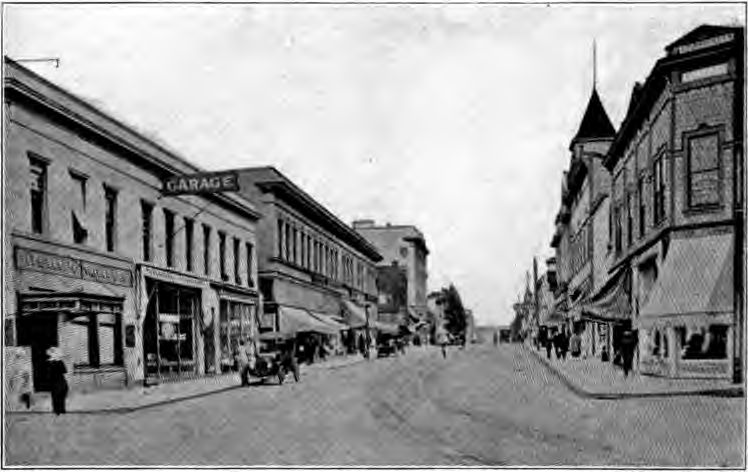
The original was an 89-foot ride powered by water, and the City describes the trip as a wheezing, jerking three to five minutes. It also had a habit of dropping water pressure across the surrounding neighborhood while it ran. In 1924 the hydraulic system was replaced with electricity and the ride fell to about 30 seconds.
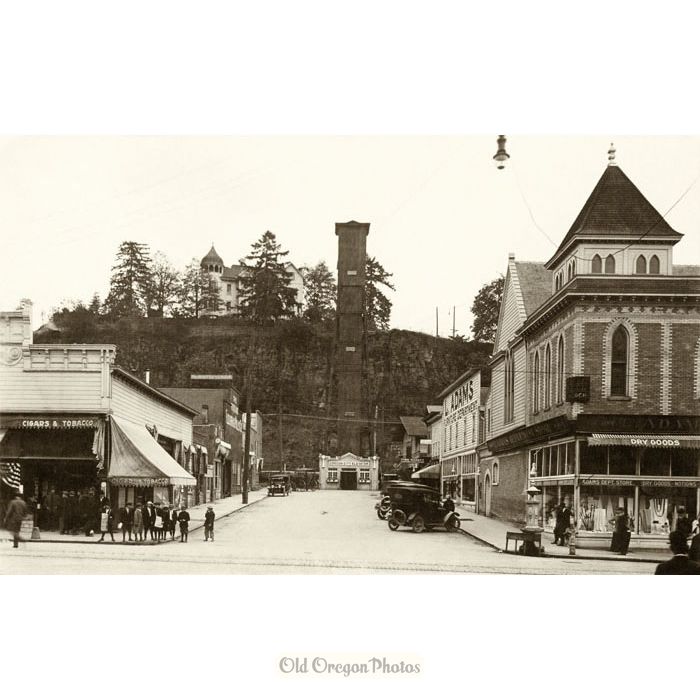
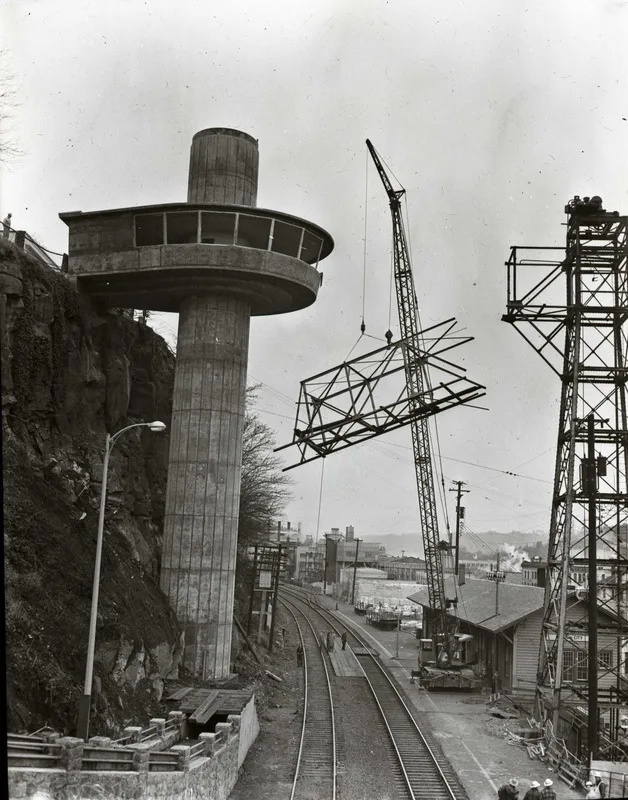
By the 1950s the original had reached the end of its life. Voters approved $175,000 in bonds in May 1952, and a construction contract was awarded in January 1954 for $116,000. The replacement was designed by Gordon E. Trapp, engineered by Ervin Aksel Sööt, and built by the Otis Elevator Company. It was dedicated on May 5, 1955 and formally accepted by the City Commission on July 13, 1955.
The result is the flying-saucer silhouette that has been the symbol of Oregon City ever since: 130 feet tall, more than 751 tons of concrete and steel, and a ride to the top in roughly 15 seconds. It was added to the National Register of Historic Places on May 15, 2014.
Elevator Street is the name the City of Oregon City gives to the route the elevator travels, and the City describes it as the only vertical street in North America. Both landings sit on 7th Street, so the elevator works as the block of 7th Street that happens to run straight up. Offbeat Oregon History reports that the route was mapped and platted as a street, 130 feet long.
The City also counts it as one of only four municipal elevators in the world.
The ride is free and always has been. The lower entrance is on 7th Street downtown; the upper landing opens onto the bluff near the McLoughlin Promenade, with a view over the Willamette River and the falls. Ridership ran to roughly 500 people a day in 1989 and nearly 800 a day by 2008, with summer peaks around 1,300.
Hours change seasonally and the elevator closes for maintenance, so check the City of Oregon City's elevator page before making a trip for it.
Willamette Falls was a gathering and fishing place long before it was a mill town. The Clackamas lived in the area that is now Oregon City, and according to the Confederated Tribes of Grand Ronde, the Clowwewalla were year-round residents who managed the fishery at the falls. In Grand Ronde tradition the falls were made by Coyote and Meadowlark, who turned a rope of young hazel shoots into rock.
Diseases brought by early explorers and traders moved through these communities ahead of most settlers. The City's own history records that smallpox and cholera devastated the tribes, and that the Clowwewalla and Cashhooks together numbered roughly 650 by the time of settlement. Under the Willamette Valley Treaty of 1855 the Clackamas, the Tumwater band of Clowwewalla, the Molalla and the Kalapuya were removed to the Grand Ronde Reservation. In 2019 the Confederated Tribes of Grand Ronde bought the old mill site at the falls back.
In 1829 Dr. John McLoughlin laid out a two-square-mile claim at the falls and began building. Oregon City incorporated in 1844, making it the first incorporated city west of the Rocky Mountains, and it was the end of the Oregon Trail. Wagons that had crossed two thousand miles stopped here. After the Oregon Territory was created in 1848, Oregon City was its first capital, until the capital moved to Salem in 1852.
In June 1844, meeting at Oregon City, the provisional government's legislative committee passed an exclusion law that banned slavery while also requiring Black residents to leave, with lashing as the penalty for staying. The lashing provision was replaced with a lesser penalty within months, and voters rescinded the law in 1845 before anyone was punished, but Oregon went on to pass further exclusion laws. A place can be proud of its history and still tell the whole of it.
It is 130 feet tall, and the ride between the two landings takes about 15 seconds. The 1955 tower used more than 751 tons of concrete and steel.
Yes. The ride has been free since it opened in 1915 and remains free today. It is a public municipal service, not a paid attraction.
Elevator Street is the City of Oregon City's name for the route the municipal elevator travels. The City describes it as the only vertical street in North America. Both of its landings sit on 7th Street.
The first elevator opened on November 27, 1915 and was water powered. It was converted to electricity in 1924. The current tower was dedicated on May 5, 1955.
The lower entrance is on 7th Street in downtown Oregon City, Oregon. The upper landing opens onto the bluff near the McLoughlin Promenade, overlooking the Willamette River and Willamette Falls.
A basalt cliff splits the town into a riverfront level and a bluff level. Mill workers living on the bluff faced a long climb up a public stairway, so voters approved a municipal elevator in 1912 to connect the two.
No. The City of Oregon City counts it as one of only four municipal elevators in the world. What is unique to it is the vertical street designation, which the City says no other route in North America holds.
Dates and figures come from the City of Oregon City except where noted.
Last updated August 12, 2026.
We are a two-person web and growth studio serving Oregon City and Clackamas County. We took our name from the elevator, because the whole job is helping local businesses get found and move up.
People have been arriving in this town and starting something since the wagons stopped here. Those are the businesses we build for.
Meet the studio Serve Oregon City visitors? See what we build.
Corrections are welcome. If a date or a detail on this page is wrong, tell us at [email protected] and we will fix it.